
A Century of Free Education – A Lifelong Debt.
On October 17, 1931 Emperor Haile Selassie I opened the doors of Medhane Alem School to 85 children in the Gullele area of northwestern Addis Ababa. It was the fourth modern school in Ethiopia, following Menelik II, Teferi Makonnen, and Empress Menen School for Girls. Those first students were orphans, given not just shelter but a future that included academic instruction alongside practical skills, at a time when modern education in Ethiopia was a rare and precious thing.
The school’s first principal was the celebrated architect Lij Hailemariam Gezmu, and its early faculty included five Ethiopian teachers alongside four French colleagues. From the very beginning, Medhane Alem was built on a simple but radical idea: that every child, regardless of background or circumstance, deserved access to a world-class education.
We attended for free. Every single one of us.
From Orphanage to Institution
The school’s evolution mirrors Ethiopia’s own. By the mid-1930s, enrollment had grown from the original 85 students to 360; a fourfold expansion that reflected a growing national hunger for education and Medhane Alem’s rising reputation. Through the upheaval of the Italian occupation, through liberation and modernization, through decades of political change, the school endured, adapted, and continued to produce graduates who would go on to lead, build, teach, and create both in Ethiopia and across the world.
Among those who walked Medhane Alem’s grounds was Afewerk Tekle; one of the greatest artists Africa has ever produced, whose iconic stained glass mural at the United Nations Economic Commission for Africa’s Africa Hall remains one of the most celebrated works of art on the continent. That a student of this school went on to achieve such heights is no accident. It is a testament to what Medhane Alem has always been: a place that saw potential and nurtured it.
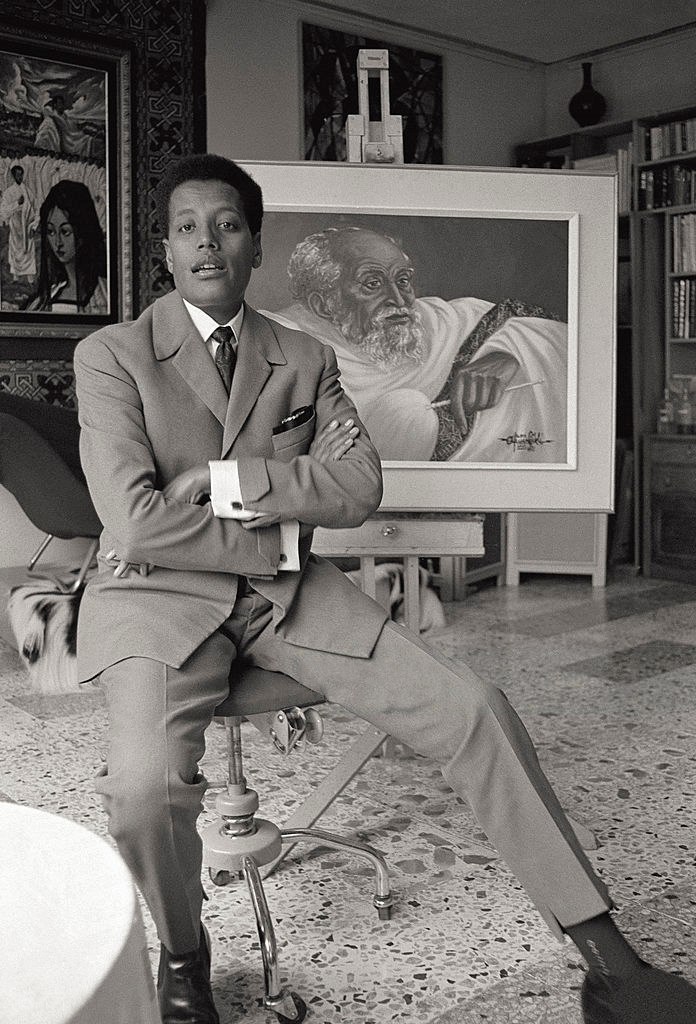
Maitre Artist Afewerk Tekle (1932–2012),
One of Africa’s greatest artists. One of ours.
We attended for free. Let’s give back.